Before you can get the answer you have to know the question.
Today it’s “Just the questions, ma’am.” (apologies to Jack Webb)
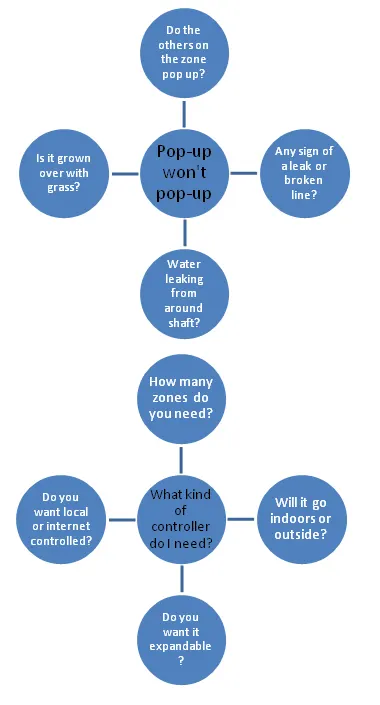
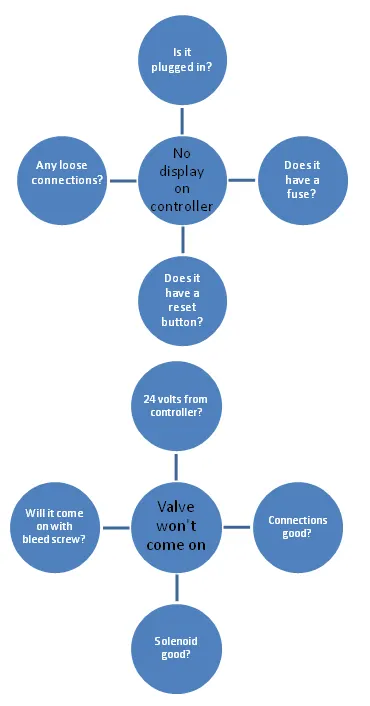

Before you can get the answer you have to know the question.
Today it’s “Just the questions, ma’am.” (apologies to Jack Webb)
 What does Florida know about irrigation that the rest of the country doesn’t? Why do they use more of a surprisingly simple and effective device than any other state? Especially when you consider how much money this device can save? Do I sound like a late-night infomercial yet?
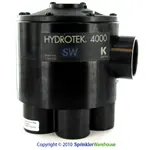 Take a look at the K-Rain Indexing valve. This valve lets you irrigate up to six zones without installing and wiring six different valves. Each time the waters turns off and back on the valve waters a different zone. There is a really smart disc inside that advances to the next zone when pressure drops. Water zone one, stop water for a few moments, start water, water zone two, etc. Automatically.
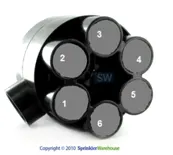 Yes, it looks strange. We don’t care: it works great. These are commonly installed either on a direct feed from a pump or downstream of a single solenoid valve. The way it works is simple. Say you are using a solenoid valve. The valve comes on. Zone one on the index valve opens and water goes to zone one. The solenoid valve turns off. The index resets to zone two. The master valve comes on, zone two waters. Repeat for three through six. These are available with either four or six outlets; a six outlet is shown.
If you are working off a pump then each time the pump cycles the valve advances. This completely eliminates the need for a solenoid valve and the related wiring and controller. These valves work with flows as low as 10 GPM and at pressures of 25 to 75 PSI.
A great feature is the possibility of future expansion. Say you only have two zones but plan on expanding. You can get the four outlet model with a two zone cam. Down the line you can change the cam out to allow for three or four zones. Just keep the two future outlets capped off until then. The four zone outlet pattern is shown; the six zone is similar. 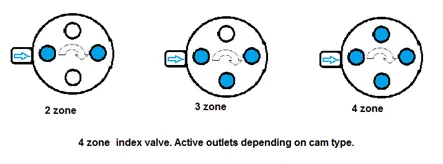
Here we have one valve that eliminates the need for any solenoid valves if working directly off a pump and eliminates the need for all but one if working off a municipal system supply. No wonder Florida loves it. Money saved on valves and money saved on wiring. Labor saved by not installing the other valves and wiring. Labor saved = money saved. Order now. Operators are standing by. Or the website is, anyway. And if you order in the next 10 minutes you’ll have plenty of time to do something else today! So hurry!
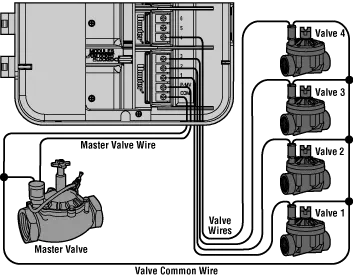
When consider installing irrigation system, you might want to consider a master valve. A master valve is an electric valve installed at the supply point which controls water flow into the main piping system. When this valve is closed water will not be supplied to the irrigation system.
A master valve will greatly reduce any water loss due to a leaky station valve because the leaky station valve can only leak while the master valve is providing pressure to the system. Also, if you damage the irrigation main line, a master valve will control water loss so the main can be repaired without shutting off the water supply.
A master electric valve is typically the same type of valve as you would use for your station valves, but rather than being installed downstream from your main line and connected to a station output in your controller it is installed upstream at the front of the main line and connected to the “master” or “pump” connection in your controller. Not all controllers support a mater valve or pump- be sure to check the features before buying a controller.
Visit Sprinklerwarehouse.com to buy valves
All The Parts of an Irrigation / Lawn Sprinkler Valve
Irrigation System Repair
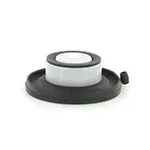
Hunter Diaphragm
Valve is an essential part of the irrigation sprinkler system. The main components of sprinkler valves are the diaphram, solenoid, springs, and various gaskets or O-rings. The solenoid, an electric cylinder, is a crucial part of an automatic valve. The solenoid receives electric message from the sprinkler system controller, and in turn controls the movement of the diaphram. Manual irrigation valves don’t require a solenoid.
The diaphram is the rubber plug inside the valve, responsible for opening or shutting off the flow of water. Behind the diaphragm is a wire spring. Some irrigation valves have a jar-top lid; in others, the lid may be held in place with screws. Many valve designs feature a bleed screw, which can be tightened or loosened to manually control the flow of water to the valve.
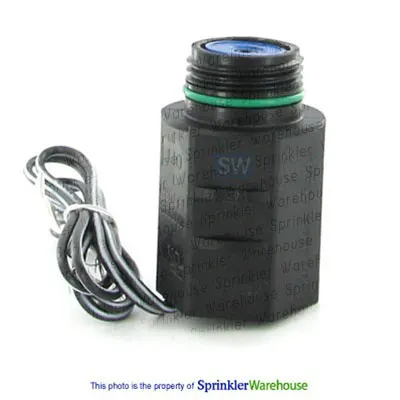
Rain Bird Solenoid
If one of the lawn sprinkler valves needs repair, it;s usually not necessary to replace the entire valve. The valve can be disassembled, and the components separately replaced. Major manufactures of sprinkler valves also make replacements parts, and it’s often easier to replace the parts than to cut the entire valve from the pipe.
If you need more irrigation help, please visit IrrigationRepair.com
If you want to buy parts to DIY srpinkler system, please visit SprinklerWarehouse.com
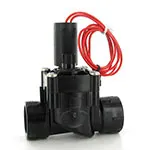
Hunter HPV Series 1" Valve
How To Repair Sprinkler System if something goes wrong? Here I am going to tell you a trick on irrigation system repair.
When you have a faulty solenoid, It is better to buy the valve and take the top off the new valve and replace the old valve top. Plus a new valve is cheaper than if you buy the parts separately. This way you will end up with a new diaphragm, solenoid, and internal filters. You will have a new valve since the bottom body piece is only a PVC base and does not go bad. The trick is you must use the exact model valve as the old valve. If you can not find the same valve (if yours is so old that we do not have it online) then we suggest you replace the entire valve. I hope this little irrigation help helps! Please visit SprinklerWarehouse.com for your parts and replacements!