The heart of your irrigation system: the irrigation valve.


If the controller is the brains of your system the valves are the heart. They control the flow of water through the lines. They are very simple in both principle and design.

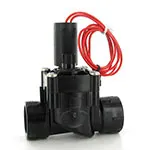
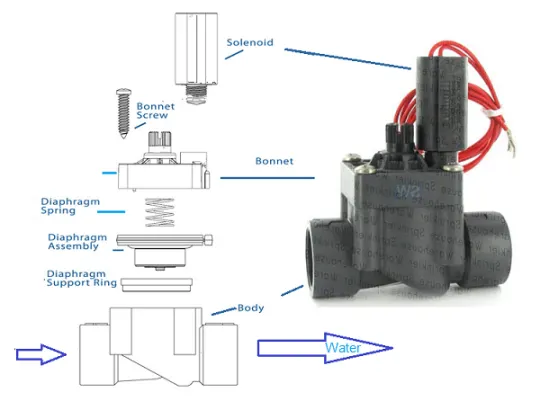
This is an example of a typical valve. Details may vary but execution is the same.
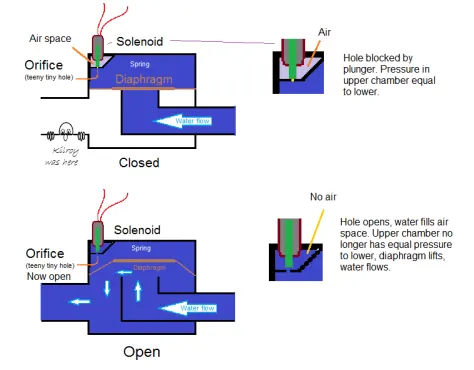
Valves have water both above and below the diaphragm. The upper chamber pressure is greater than the lower due to the combination of spring pressure and trapped water. They also have an air space under the solenoid with a bleed hole that is opened when the solenoid plunger is retracted (zone turned on).

Opening this hole lowers the pressure above the diaphragm, the water below forces the diaphragm up and water flows through. Most valves will not open with less than 15 to 20 pounds per square inch of pressure. This is only a concern with extremely low pressure; usually on gravity feed water tanks.
Picking a good valve is simple: stay with a name brand. After that you have few decisions to make. Most people use 1” valves. Simple reasons are they are the most economical, readily available, both new and parts, and provide the flow most residential and small commercial designs need. Even if your design calls for a ¾’ valve use 1”. It doesn’t cost more and if you make changes or expansions in the future you won’t be restricted by the smaller size. A 1” valve will allow up to 25% more flow than a ¾” valve.

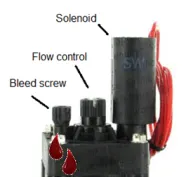
The next choice is flow control. Flow control is separate knob or screw on top of the valve and allows you to regulate the water going through the valve. In most cases flow control is not necessary but it does have advantages. If a valve sticks open, one of the more common valve failures, the flow control allows you force the valve closed. If your water pressure is low, either because of supply problems or overlapping valve operations, partially closing the flow control will help the valve close faster and more reliably. It’s cheap insurance to have.
Valves fail in consistent ways. It may not close completely. This could be due to debris, the most common reason, or worn diaphragms. Check out FILTRATION for how to prevent debris. Diaphragms do wear and age, generally resulting in a tear in the diaphragm. Just replace. For a very short video on how to do a repair look at . Valve bodies rarely fail unless suffering freeze damage or shovel hit.

Solenoids will fail over time or the connections to the control box could have become corroded. Check the connections; make sure they are clean. For a simple way to test the solenoid:

 Steps in Creating a Portable Valve Activator.
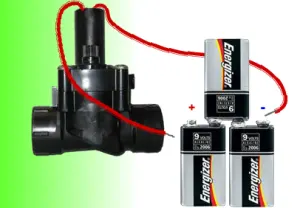
  1. Take three 9-Volt Batteries
  2. Connect in a series
  3. Connnect one valve wire to the negative pole
  4. Then connect the other wire to the positive pole to activate the valve
  5. If the solenoid is functioning properly, you should hear a “click”

For a more involved but very easy and thorough way to test the solenoid and all wiring look at USING A MULTIMETER.


The Fourth of July and what I can’t do.


Well, I tried and couldn’t do it. Couldn’t figure out how to tie the Fourth of July into irrigation systems.

You’d think this would be easy. I’ve tied in zombies, Corvettes, the Bellagio and the Nile river into some aspect of irrigation: stream rotors, insecticides, nozzles and water barrels.

These have, admittedly, been a stretch at times.  Big stretch.  Can’t do it this time.

Instead, the staff at Sprinkler Warehouse hopes that you and yours have an enjoyable holiday. This is the day that started our country. On July 4th, 1776 the Second Continental Congress approved the Declaration of Independence, one of the most important documents in history. It’s the reason we are here. It’s a great day to enjoy and celebrate our freedoms.

Be careful with the fireworks. From experience I’ll tell you that you don’t want to hold bottle rockets in your hand, firecrackers going off in an open palm DO hurt, you don’t want to bend down to see if the rocket fuse is really lit, if you drop your sparkler don’t try and catch it by the wrong end and the best way to enjoy fireworks is to sit back and let someone else do the work.

Y’all have a good holiday.

What is an Irrigation Master Valve?


Irrigation System Supplies Guide


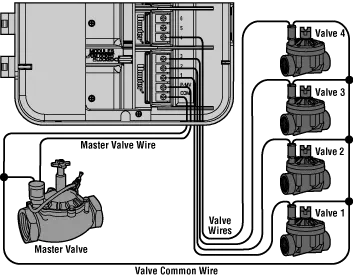
When consider installing irrigation system, you might want to consider a master valve. A master valve is an electric valve installed at the supply point which controls water flow into the main piping system. When this valve is closed water will not be supplied to the irrigation system.

A master valve will greatly reduce any water loss due to a leaky station valve because the leaky station valve can only leak while the master valve is providing pressure to the system. Also, if you damage the irrigation main line, a master valve will control water loss so the main can be repaired without shutting off the water supply.

A master electric valve is typically the same type of valve as you would use for your station valves, but rather than being installed downstream from your main line and connected to a station output in your controller it is installed upstream at the front of the main line and connected to the “master” or “pump” connection in your controller. Not all controllers support a mater valve or pump- be sure to check the features before buying a controller.
Visit Sprinklerwarehouse.com to buy valves

Parts of an Irrigation Valve


All The Parts of an Irrigation / Lawn Sprinkler Valve

Irrigation System Repair

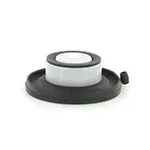
Hunter 33-2100 - Valve Diaphragm Assembly for Hunter PGV 1

Hunter Diaphragm

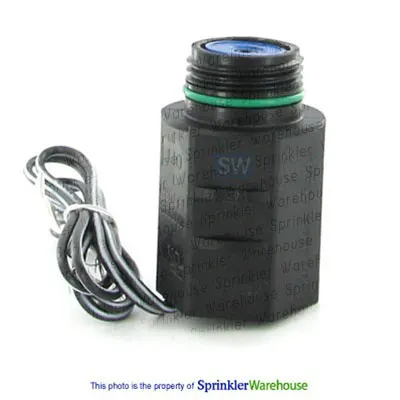
Valve is an essential part of the irrigation sprinkler system. The main components of sprinkler valves are the diaphram, solenoid, springs, and various gaskets or O-rings. The solenoid, an electric cylinder, is a crucial part of an automatic valve. The solenoid receives electric message from the sprinkler system controller, and in turn controls the movement of the diaphram. Manual irrigation valves don’t require a solenoid.

The diaphram is the rubber plug inside the valve, responsible for opening or shutting off the flow of water. Behind the diaphragm is a wire spring. Some irrigation valves have a jar-top lid; in others, the lid may be held in place with screws. Many valve designs feature a bleed screw, which can be tightened or loosened to manually control the flow of water to the valve.

Rain Bird 208588-01 Solenoid - Replacement Solenoid for all DV, DVF, ASVF, JTV Series Valves

Rain Bird Solenoid

If one of the lawn sprinkler valves needs repair, it;s usually not necessary to replace the entire valve. The valve can be disassembled, and the components separately replaced. Major manufactures of sprinkler valves also make replacements parts, and it’s often easier to replace the parts than to cut the entire valve from the pipe.
If you need more irrigation help, please visit IrrigationRepair.com
If you want to buy parts to DIY srpinkler system, please visit SprinklerWarehouse.com

Repair or Replace an Irrigation Valve?


Hunter HPV Series 1" Valve

Hunter HPV Series 1" Valve

How To Repair Sprinkler System if something goes wrong? Here I am going to tell you a trick on irrigation system repair.

When you have a faulty solenoid, It is better to buy the valve and take the top off the new valve and replace the old valve top. Plus a new valve is cheaper than if you buy the parts separately. This way you will end up with a new diaphragm, solenoid, and internal filters. You will have a new valve since the bottom body piece is only a PVC base and does not go bad. The trick is you must use the exact model valve as the old valve. If you can not find the same valve (if yours is so old that we do not have it online) then we suggest you replace the entire valve. I hope this little irrigation help helps! Please visit SprinklerWarehouse.com for your parts and replacements!