
I’ll start by telling you that’s what I do. I repair sprinkler systems. This does cause a problem, as I’m telling you not to listen to me. Luckily, that’s handled by quantum metaphysics and we can skip ahead.
We are frequently asked: “What’s the best —?” Truth is, we usually don’t know. What we do know is what works for us. We have two basic requirements: we want to make a profit on the repair and we want the product to be good enough that we are not called back for warranty service. This defines our ‘best’ product.
We lose money on warranty repairs. This is bad.
We are also a conservative bunch. We don’t want to be the first one to try the new product and see if it lasts. We go with what we know. We use the same rotors, the same controllers, the same pop-ups time and again. I’ll go over a few of those and what might be better.
Pop-ups and nozzles
The Rain Bird 1800  series is one of the most popular popups out there, if not the most popular. It’s my default purchase. Why? Because in the years I was training my supervisors told me to go with the 1800s. Who am I to argue with the boss? Therefore it’s what I know and what I recommend.
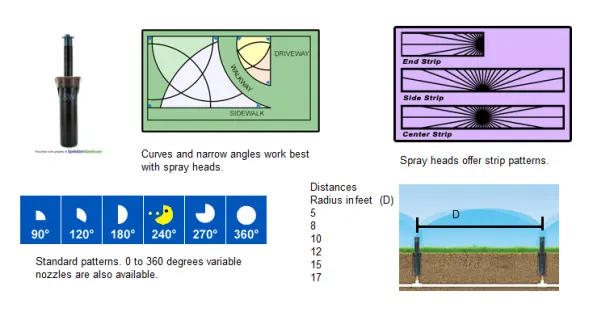
What about the Hunter Pro Spray, Toro 570Z, and K-Rain 7800? All good, all in the same price range. The one you’ve never heard of, the K-Rain, might have the best seal in the bunch. Looks that way in drawings and specs. However, I install 1800s and don’t want to experiment. See the problem here? I’m passing on a potentially better popup available at the same price just because I don’t want to try it and risk a warranty call.
How about nozzles? Rain Bird, Hunter and K-Rain are all extremely popular, pretty much same precipitation rate, all in the same price range. Which is best? Might be the Toro Precision nozzles. In a 12’ full circle spray they use about 1.3 gallon per minute less. Other sizes have similar savings. Minimizes run off, helps with low gpm systems, and has an efficient pattern. Why don’t I use and recommend them? They cost twice as much, if not more, than the others. People don’t want to pay for something they really can’t see and one nozzle spraying water looks like any other.
A quick note about something you’ve never heard of: K-Rain. K-Rain makes good products, has 90+ patents in the industry, is very competitively priced and apparently has one of the worst marketing programs around. Have you ever heard of it? People who don’t have irrigation systems know of Rain Bird, Hunter and Toro. There are many pros who don’t know about K-Rain. It’s hard for someone to recommend something they’ve never heard of.
Rotors
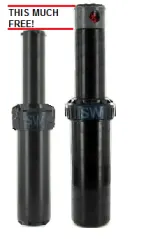
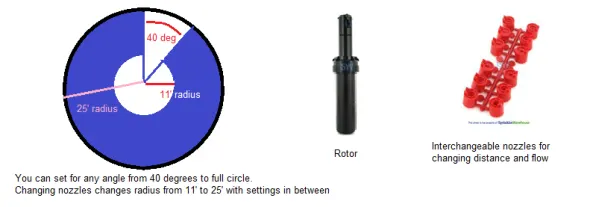
The most popular rotor out there is the Hunter PGP. Sells by the tens of thousands. Is it the best? Don’t know. I sure put in a bunch of them. To be honest I like the Rain Bird 5000 “Rain Curtain” spray coverage better. The Toro T5 and the K-Rain 11000 series are in the same price range but you get a 5” pop-up instead of a 4”. An extra inch for nuthin’. But people know Hunter and it works so I stay with it.
Controllers
I like and install Hunter. Good and reliable. That’s not the main reason I install it. Look at the face of Hunter controllers. They all look the same. I don’t have to worry about going to service a system and having to remember different brands or carry manuals with me. And, of course, I tend to recommend Hunter for the same reason.

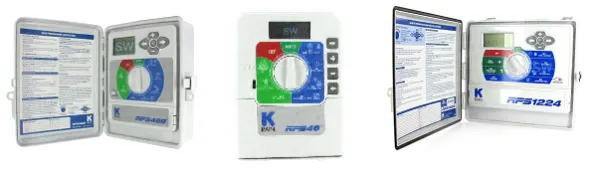
Now look at K-Rain series. Their controllers are usually lower than both Rain Bird and Hunter, they also have a standard front and they are reliable. I could save you money by installing them if I were a bit more adventurous. Unfortunately, I’m a coward when it comes to money and warranties.
The point to all this is that your repairman will give you a safe answer. He works in the field all day, knows what works for him and makes his life easier. The product might or might not be the best but it will be safe for him to recommend and it will work.
There are a lot of products out there that don’t get the exposure they should. Check our site for ideas. At Sprinkler Warehouse we try to give you all the details along with links to different manuals. A lot of information there to help you make a better choice and far more variety than many repair people have ever seen.
 around. Must be good, right?
 Or
Or